Cultural Perspectives on Puzzles: How Different Societies Approach Problem Solving
The Intriguing World of Puzzles Across Cultures
Puzzles have long captivated humanity, showcasing not only our need for entertainment but also highlighting the diverse ways cultures approach problem-solving. From the colorful pieces of a jigsaw puzzle to the intellectual challenges posed by complex mathematical riddles, each type of puzzle provides insight into the values, beliefs, and thought processes specific to societies around the globe. Their varied forms and interpretations reveal a rich tapestry of creativity and critical thinking that transcends borders.
Traditional Games: Cultural Examples of Puzzles
Many cultures boast indigenous puzzles that reflect their unique creativity and perspectives on problem-solving. For instance, Chinese tangrams consist of seven geometric pieces that can be rearranged to form various shapes, enhancing spatial awareness and encouraging playful exploration. In contrast, the Japanese sudoku, developed from earlier number puzzles, challenges solvers to fill a 9×9 grid based on logical deduction and pattern recognition. Each of these traditional games embodies local customs and emphasizes skills valued within that culture.
Philosophical Approaches: Different Ways of Thinking
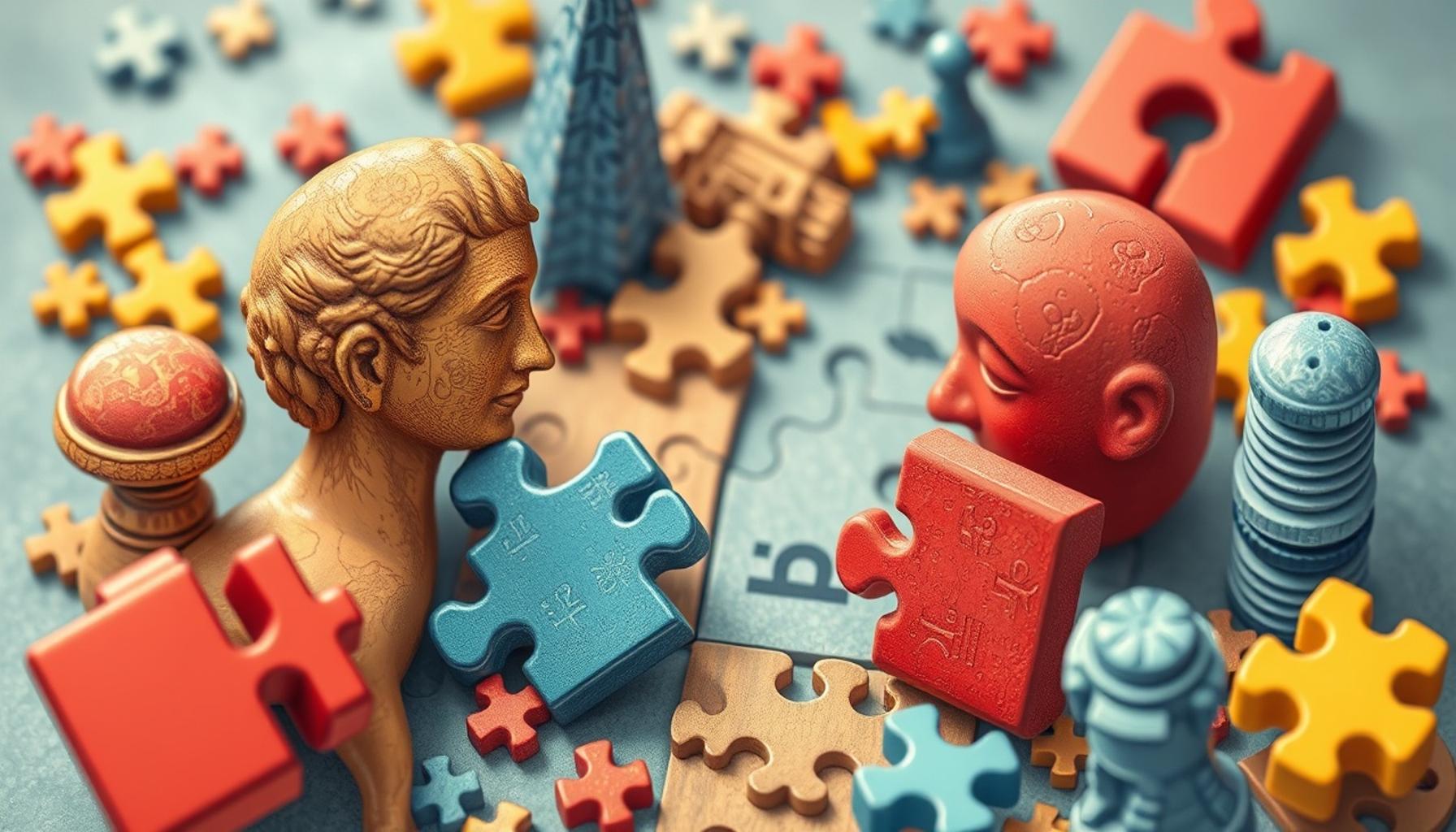
The approaches to puzzles can significantly vary between cultures, notably between Western and Eastern philosophies. In the West, logic-based puzzles, such as chess and logic grids, emphasize analytical thinking and strategic planning. Contrarily, Eastern cultures may promote holistic problem-solving methods, where the focus is on understanding the interconnections between elements rather than isolating individual components. This reflects a deeper philosophical stance that values harmony, balance, and the collective over mere individual achievement.
Community Engagement: Strengthening Bonds Through Play
Puzzles often serve as communal activities that strengthen bonds within societies. In many regions, groups gather to solve riddles or engage in collaborative games, fostering teamwork and communication. For example, in the United States, escape rooms have gained popularity as social team-building experiences, where individuals must work together to solve complex puzzles under time constraints. Such activities not only enhance problem-solving skills but also promote social cohesion, as participants share an immersive experience that can lead to deeper relationships.
This diversity in puzzle-solving techniques highlights not just the puzzles themselves, but also the collective psyche of societies grappling with questions that resonate on a larger scale. The challenges each culture faces—be it economic, social, or philosophical—often shape the puzzles they create and enjoy. The adaptation of these methods reflects the priorities and challenges specific to each society, intertwining individual and group identities with broader cultural narratives.
As we investigate the multifaceted world of puzzles, we uncover how these fascinating constructs serve as a foundational tool for problem-solving in various cultural contexts. Each puzzle tells a story, leading us to a greater understanding of human cognition, creativity, and the intricate ways we connect with one another across the globe.
DISCOVER MORE: Click here to learn about the connection between word games and mental agility
Diverse Puzzles and Their Cultural Significance
Throughout history, puzzles have transcended mere entertainment, evolving into tools that reflect the values and thought processes of different cultures. Each society has crafted its own puzzles, serving not only as leisure activities but also as educational mediums that foster essential skills. The uniqueness of these puzzles underscores the cultural nuances that shape how communities tackle problems.
For example, consider the Mexican Lotería, a game that is not just a source of fun but also an embodiment of cultural storytelling. Each card represents various elements of Mexican folklore, history, and social norms, allowing players to connect with their heritage as they solve the game’s challenges. Similarly, the Indian game of Chaturanga, often regarded as the precursor to chess, emphasizes strategy and foresight, qualities deeply rooted in Indian philosophical thought regarding the complexities of life and warfare.
The Educational Role of Puzzles in Society
Puzzles also play a crucial role in education across cultures, serving as an instrumental tool for teaching critical thinking and problem-solving skills. In Scandinavian countries, for instance, the puzzle-based learning approach is central to early childhood education. Children are encouraged to engage with various puzzles that stimulate creativity and logical reasoning, laying a strong foundation for their future cognitive development.
In the United States, educators are increasingly incorporating STEM-based puzzles into their curricula. These challenges often involve mathematical reasoning and scientific inquiry, encouraging students to think critically and work collaboratively. For instance, programs that utilize robotics and programming puzzles not only promote problem-solving but also foster skills that align with the demands of the modern job market.
The Evolution of Puzzle Platforms: Technology Meets Tradition
The advent of technology has revolutionized the puzzle landscape, merging traditional problem-solving methods with digital innovations. Online platforms now provide access to puzzles that span cultures, making them universally accessible. Mobile applications featuring crosswords, Sudoku, and logic games have connected millions worldwide, fostering a sense of global competition and camaraderie.
- Diverse Game Formats: Digital puzzles often allow for various game formats, including timed challenges and multiplayer settings.
- Cultural Exchange: Online forums enable discussions around cultural perspectives on puzzles, leading to a richer understanding of how different societies approach problem-solving.
- Accessibility: Technology has democratized access to puzzles, allowing individuals from diverse backgrounds to engage with and learn from each other.
This interplay between tradition and technology highlights an intriguing aspect of cultural perspectives on puzzles. It unveils not only how societies approach problem-solving but also the underlying values that make each puzzle a reflection of community identity. As we delve further into these cultural expressions, it becomes evident that the solutions to puzzles often mirror the complexities of societal challenges, creating a fascinating commentary on human interaction and ingenuity.
Cultural Approaches to Puzzles
Understanding how different cultures approach problem-solving through puzzles reveals vital insights into their values and thought processes. In many cultures, puzzles are not merely trivial pastimes; they are profound tools for teaching logic, creativity, and resilience. For instance, in Japanese culture, puzzles often incorporate elements of nature and mindfulness, guiding individuals to engage deeply with their environment and enhance their mental agility.
Countries like China use puzzles embedded in traditional folklore that teach moral lessons while challenging the intellect. These oftentimes require collaborative effort, reflecting the communal values that are integral to Chinese society. This indicates that the process of solving puzzles is just as important as the solution itself, with emphasis on teamwork and societal contributions.
In contrast, markers of individualism can be noted in Western approaches to puzzles, where the emphasis is often on personal achievement and cognitive prowess. This reflects a cultural narrative that valorizes self-sufficiency and showcases instances like the rise of escape rooms, which have become a popular form of recreational problem-solving enjoyed by individuals as a form of self-entertainment.
| Cultural Context | Puzzle Approach |
|---|---|
| Japanese Culture | Mindfulness and nature integration challenge intellect and enhance focus. |
| Chinese Culture | Community and Collaboration in traditional folklore puzzles fosters teamwork. |
| Western Cultures | Individual Achievement where personal strength in solving puzzles is emphasized. |
These varying approaches not only illustrate the diversity in cultural narratives around problem-solving but also offer strategic frameworks that individuals can learn from to enhance their cognitive flexibility and adaptability in everyday life. Exploring how different societies solve puzzles encourages a broader understanding of global perspectives and nurtures intercultural dialogue.
DIVE DEEPER: Click here to discover more
Community Bonding Through Collaborative Puzzles
Puzzles also serve as a vital medium for community engagement and strengthening social ties. In many cultures, solving puzzles together fosters collaboration and reinforces community bonds. For instance, in Japan, the game of Shogi, often referred to as Japanese chess, is more than a solitary pursuit; it is typically played in parks and community centers. Players gather to challenge each other, resulting in shared experiences that promote social interaction and learning. The communal approach to Shogi emphasizes strategic thinking, but it also underscores the importance of mentorship, where seasoned players guide newcomers, enhancing both individual and collective problem-solving skills.
Similarly, in Brazil, the traditional game of jogo do bicho features not only elements of luck and strategy but also serves as a platform for community gatherings. It acts as a social equalizer, drawing people from various backgrounds who engage in discussions about the outcomes and strategies while building camaraderie. These gatherings help to strengthen community bonds through shared problem-solving experiences, highlighting how puzzles can serve social functions beyond just entertainment.
Traditional Wisdom and Puzzle Solving
The incorporation of traditional wisdom into puzzles can also be seen in various indigenous cultures around the world. In Native American communities, storytelling puzzles are a tool for passing down knowledge, where each riddle or brainteaser holds historical or moral significance. For example, the Lakota people have used puzzles that incorporate elements of storytelling to impart lessons on life, identity, and survival. These challenges encourage critical thinking and creativity among younger generations, fostering a deeper understanding of their heritage.
In contrast, the Chinese Tangram puzzles reveal the cultural appreciation for balance and harmony. Originating from ancient China, Tangrams involve rearranging seven geometric pieces to form a specific shape or figure. This practice not only sharpens spatial reasoning but also reflects the Chinese philosophical ideal of uniting form and function, a value deeply embedded in their approach to problem-solving. This cultural trait emphasizes the harmony between creativity and logic, showcasing how traditional perspectives influence puzzle design and execution.
The Influence of Language in Puzzle Solving
Language shapes our interactions with puzzles, influencing the way we approach and solve them. The linguistic diversity present in various cultures impacts both the construction of puzzles and the strategies used to tackle them. For instance, the wordplay in crossword puzzles in English-speaking countries often involves puns and idioms that may not translate into other languages. Similarly, riddles in different cultures may rely on specific linguistic structures or cultural references that provide unique problem-solving challenges. This intersection of language and puzzles highlights the cognitive flexibility required to navigate diverse approaches to problem-solving.
- Language-Specific Puzzles: Different languages provide distinct frameworks that affect the design of puzzles, showcasing unique cultural traits.
- Cross-Cultural Puzzles: Some puzzles attempt to bridge linguistic divides, inviting participants from various backgrounds to seek common ground through shared challenges.
The intricate relationship between language and puzzles invites deeper exploration, encouraging individuals to consider how their linguistic backgrounds shape their problem-solving techniques. This dynamic contributes to a rich tapestry of cultural interactions, revealing that puzzles not only challenge our minds but also provide profound insights into the beliefs and values that guide communities across the globe.
DIVE DEEPER: Click here to discover more
Conclusion: The Universal Language of Puzzles
In exploring the various approaches to puzzles across cultures, we uncover a rich tapestry that illustrates how different societies engage in problem solving through unique lenses. From the communal bond forged in Japan’s Shogi matches to the storytelling puzzles of Native American traditions, we see that puzzles are more than mere entertainment; they serve as crucial pathways for cultural transmission, social bonding, and cognitive development.
The influence of language in puzzle-solving further emphasizes this connection. As we navigate through language-specific challenges, such as crossword puzzles and riddles, we recognize that linguistic diversity adds depth to puzzles, making them cultural artifacts that reflect shared values and experiences. Indeed, puzzles encapsulate a universal language that transcends geographical and linguistic barriers, inviting collaboration and mutual understanding among different communities.
This exploration prompts us to consider the broader implications of puzzles in our increasingly globalized world. As we share these problem-solving practices, bridges are built between cultures, nurturing a spirit of inclusion and curiosity. In this light, puzzles can be seen as harmonizers of thought, offering opportunities for individuals to learn from one another while enriching their own cognitive repertoires.
Thus, as enthusiasts and casual players alike engage with puzzles from diverse cultures, they are not simply exercising their minds; they are participating in a global dialogue that celebrates the art of problem solving in all its forms. This appreciation for the cultural dimensions of puzzles not only enhances our understanding of human ingenuity but also invites us to reflect on our own approaches to challenges in an interconnected world.
Related posts:
Collaborative Problem Solving: How Team-Based Puzzles Foster Communication and Creativity
The Impact of Escape Rooms on Real-World Problem Solving Abilities
Puzzles as a Tool for Stress Relief: Finding Solutions Through Play
The Science Behind Puzzle Design: How Complexity Influences Problem Solving Skills
Gamification of Problem Solving: How Game Elements Enhance Learning and Engagement
Mind Games and Cognitive Flexibility: Adapting Strategies for Different Challenges

Linda Carter is a writer and puzzle expert specializing in mind games, brain teasers, and cognitive challenges. With extensive experience helping individuals enhance their problem-solving skills and think critically, Linda shares her knowledge on our platform. Her goal is to empower readers with practical advice, engaging puzzles, and strategies to sharpen their minds and achieve success in the captivating world of mind games and puzzles.